
Founder's Mindset
4 Keys to Guiding Customers Up the Value Ladder
Published

How do you guide customers up the value ladder and raise lifetime value? Four keys: reward them, exceed expectations, skip the hard sell, and communicate personally instead of spamming.
Contents
- What are the 4 keys to guiding customers up the value ladder?
- Key 1: Why are rewards the best way in?
- Key 2: How do you exceed customer expectations?
- Keys 3 and 4: Why skip the hard sell and communicate personally?
- Emotional needs × personalization = the journey to loyalty
- Putting the 4 keys into daily practice
Customer loyalty isn't built on discounts — it's built on a business that keeps delivering value. Rewards are the way in, but the real breakthrough comes from continually giving value. Be loyal to your customers and they'll be even more loyal to you, climbing the value ladder step by step until they become your highest-spending long-term customers.
What are the 4 keys to guiding customers up the value ladder?
- Reward your customers
- Exceed their expectations
- Skip the hard sell
- Communicate personally, and don't spam
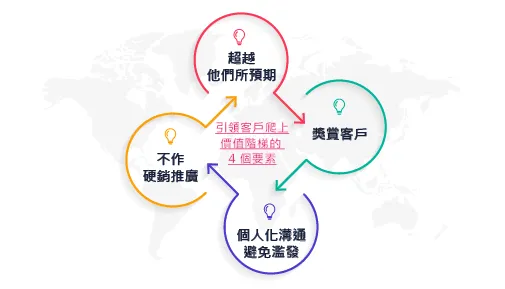
The four keys feed each other: rewards bring customers in, exceeding expectations makes them want to stay, and honest, personal communication keeps the relationship going.
Key 1: Why are rewards the best way in?
Rewards are the easiest and most effective way to get people in the door. Unlike before, consumers aren't satisfied with discounts alone — they want genuine, human interaction, and a single warm greeting from you might be all it takes to make them fall for your brand.
Everyone loves a surprise, and everyone loves a gift. Small giveaways, free tools, or tickets to an important event are all highly effective ways to attract new users.
Key 2: How do you exceed customer expectations?
New users take time to become real customers. During that time, keep giving them something of value — it's how you show you genuinely care, and it makes starting the journey toward loyalty much easier. Once they're on that journey and feel the joy of being looked after, they become your highest-spending customers and the micro-influencers who happily recommend you to their friends.
For existing customers, go beyond what they imagined and give them more than they paid for — more attention, more usage tips, even a free upgrade. Each of these makes customers feel they're getting more than their money's worth.
Keys 3 and 4: Why skip the hard sell and communicate personally?
In today's data-driven era, understanding the customer journey is a must. With analysis, data stops being a pile of numbers and becomes a three-dimensional picture of what different users prefer — so you can send personalized rewards or offers. Never underestimate personalization: many studies show that targeted messages, such as recommendations based on order history or nurturing emails matched to each user's interests, drive significant revenue growth.
Most businesses only "engage" with customers when they want to push a product or ask for support — and that "engagement" is usually a blast of hard-sell emails. You're saying what you want to sell, not what they want to hear. Frankly, that kind of outreach feels insincere, and seeing your message is more likely to leave a negative impression.
Emotional needs × personalization = the journey to loyalty
Playing a truly moving melody isn't easy — but that's exactly what sets you apart from competitors. Purchases are driven by emotion, not logic. Happiness, sadness, anger, fear, surprise and disgust are the six core human emotions: spam triggers disgust, while a gift or reward sparks surprise. Put real thought into your content and you'll win customers over.
The better a business understands consumer preferences, the stronger the loyalty it builds — and the more profit it earns. Keep leaving customers with a deep, positive impression and you'll keep raising their lifetime value.
One final tip:
Be loyal to your customers, and they'll be even more loyal to you.
Putting the 4 keys into daily practice
In practice, start by tagging customers by source, purchase history and interests, then send each segment something relevant — a birthday gift, usage tips or an exclusive offer — instead of blasting the same promotion to your whole list. X Lead Funnel's customer journey and tagging keeps that data organized, and multichannel messaging automation sends email, SMS or LINE messages on a steady rhythm. For the fundamental difference between promotion and marketing, read Promotion, Selling, Marketing — Know the Difference; to see where the value ladder fits in a growth strategy, see 3 Ways to Grow a Business.
Related articles
- Why Personal Branding Matters So Much in the Gig Economy
- How to Choose Marketing Automation Tools for a Small Business
- [Must Read 2026] LINE Official Account Price Hike: Cut Costs