
Founder's Mindset
Let Knowledge Cash Power Your Business
Published Updated

Many businesses create value but fail to turn it into profit. Learn what Knowledge Cash is, the four levels of the value ladder, and why owning your customers' success is how you capture value.
Contents
While you're constantly creating value for your customers, have you also put a plan in place to capture some of that value?
Customers always want more — it's human nature — and your competitors are ready to meet those demands. You've probably done plenty right: cutting costs, focusing on your core business and making smart use of the internet to grow. With operating costs falling, you're delivering more value to customers than ever and rolling out better new services. You're also partnering with suppliers in new ways and breaking into entirely new lines of business…
Yet, frustratingly, you still can't generate enough profit growth.

Capturing the value you create is one of the biggest challenges businesses face today — and exactly what you'll need to stand out in tomorrow's competitive marketplace.
Why Doesn't Creating Value Mean Making Money?
The problem is that the very ability to create value also drives the source of that value — knowledge and information — toward being essentially free. It mirrors Adam Smith's observation about water: water is everywhere and available at almost zero cost, so even though it's essential, it's free. Today, whether a business is in a mature or an emerging industry, it faces a widening gap between creating value and capturing value.
The ideas of this "value gap" and the value ladder come from Jan Dyer Torsilieri and Chuck Lucier's 2000 strategy+business article "Climbing Up the Value Ladder." In the dot-com era, the value gap pointed to several surprising, even counterintuitive, conclusions:
- Be skeptical of getting rich by selling information: plenty of online marketplaces, internet companies and biotech firms believed they could strike it rich simply by selling information or knowledge — the advice was to sell your shares in them.
- Assess the new economy's "bottled-water businesses": companies trying to sell their own branded information need to show they can scale enough to justify their share prices.
- Be wary of incumbents bundling information into products: established companies investing heavily in bundling information or knowledge with their products and services are unlikely to earn a sufficient return.
That said, keep an eye on mature industries that manage to accelerate revenue growth through "Knowledge Cash."
The Most Successful Companies Focus on Capturing Value
The most successful companies focus on capturing value, not just creating it. It may seem counterintuitive, but the most effective strategy is for a business to use its knowledge to take on greater responsibility for ensuring its customers' success. These companies build a range of operating models that let customers choose how much they're willing to pay and how much responsibility they want the company to shoulder.
Today's online shoppers are savvy and demanding, so it's no surprise that businesses find selling services and products online challenging. That's why a business must recognize from day one that a customer-centric operating strategy is indispensable. Customers are the most important pillar of the modern business, and to survive the competition in online retail, you need to build genuine relationships with them.
The Four Levels of Building Knowledge Cash
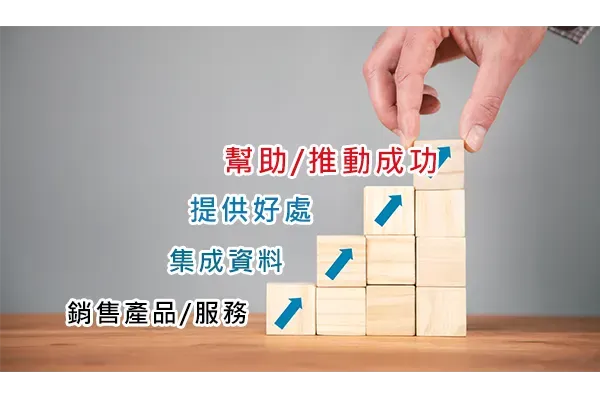
Climbing this value ladder brings a business closer to what its customers actually need. As problems get solved one by one, more customers come to appreciate the convenience these companies provide — and word of mouth ultimately strengthens the company's reputation, wins more customers and grows the business.
How Can a Small Business Climb the Ladder?
For studios and small businesses, climbing doesn't require a big investment. It means moving from "the sale is the end" to "helping customers get the job done": send how-to guides and reminders after purchase, regularly share content that helps customers reach their goals, and use their feedback to learn what they need next. For example, a survey form can tag customers based on their answers, and omnichannel messaging automation can send the right content at each stage — so you keep delivering knowledge-based value even with a small team. Related reading: "4 Keys to Guiding Customers Up the Value Ladder."
Related articles
- Why Personal Branding Matters So Much in the Gig Economy
- How to Choose Marketing Automation Tools for a Small Business
- [Must Read 2026] LINE Official Account Price Hike: Cut Costs