
Founder's Mindset
Long Text Sucks?
Published
Do people still read long articles? Sabri Suby's split-test experience and Backlinko's study of 912 million blog posts say yes, as long as your layout, headlines and subheadings do the work.
Contents
In an age of fast-food culture, people often say nobody reads long articles anymore. The data says otherwise: as long as the content is entertaining and compelling, long-form copy tends to beat short content on sales, backlinks and social shares.
Sales Copy: Does Long Copy Beat Short Copy Every Time?
In his book Sell Like Crazy: How to Get As Many Clients, Customers and Sales As You Can Possibly Handle, Sabri Suby draws on more than $30 million spent generating traffic and thousands of scientific split tests. His conclusion: long-form copy beats short-form copy every single time. The big caveat, of course, is that your content has to be genuinely entertaining and engaging.
SEO and Social Shares: What 912 Million Posts Reveal
Even in SEO, your website traffic can benefit from long-form content. SEO expert Brian Dean's Backlinko, working with BuzzSumo, analyzed 912,000,000 blog posts and in 2019 published some fascinating findings (the study covered English-language content, so lengths are word counts).
Long-form content earns more backlinks
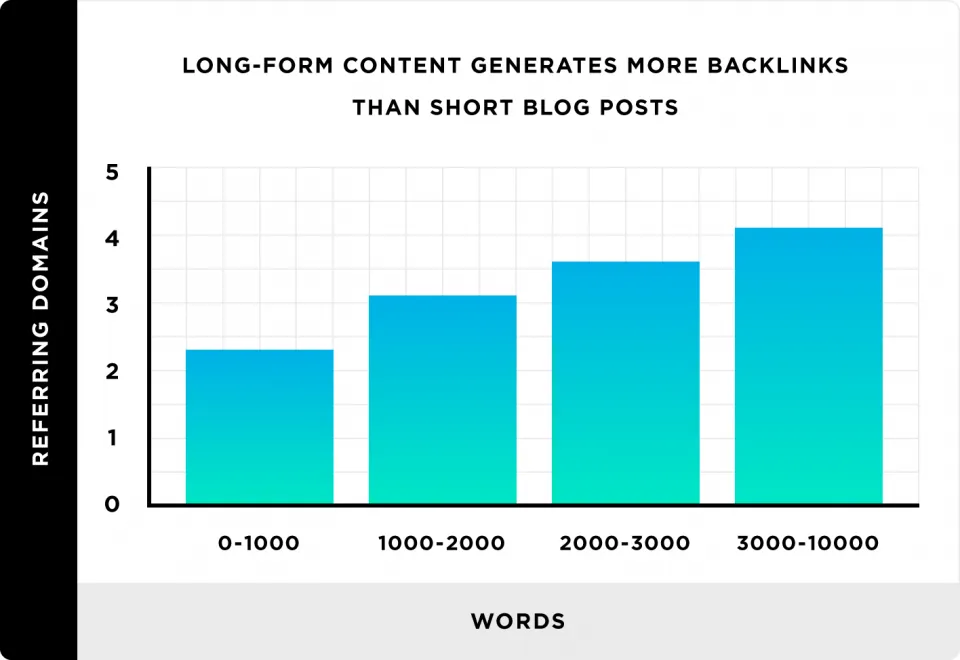
Long-form content earns an average of 77.2% more backlinks than short posts.
The chart shows that the longer the article, the more referring domains it attracts on average: posts of 0–1,000 words get the fewest, and posts of 3,000–10,000 words get the most.
Longer headlines get more shares
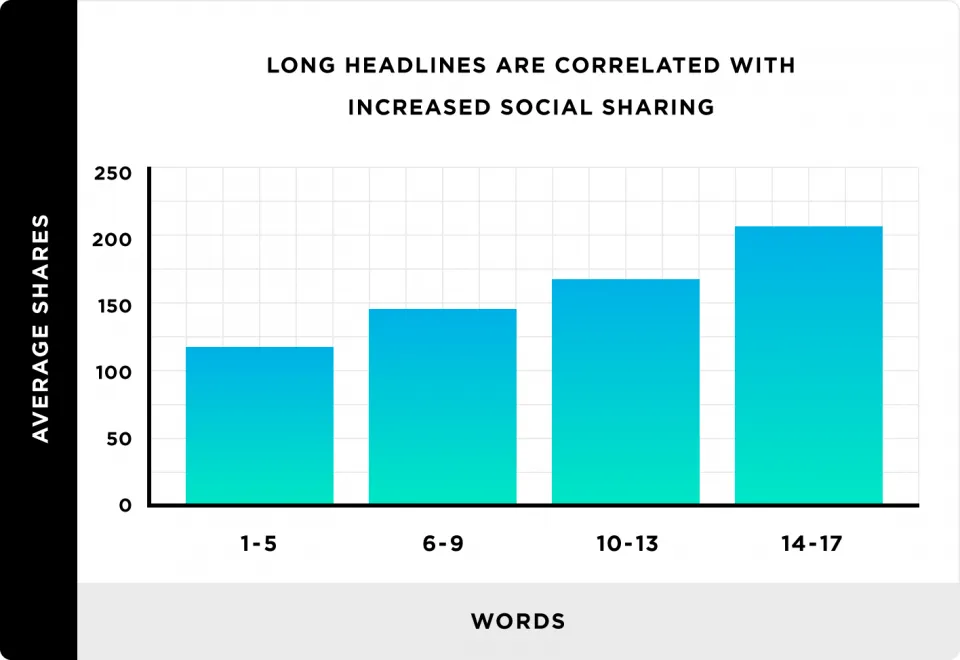
Longer headlines are correlated with more social shares: headlines of 14–17 words get 76.7% more shares than headlines of 1–5 words.
Want the most shares? Aim for 1,000–2,000 words
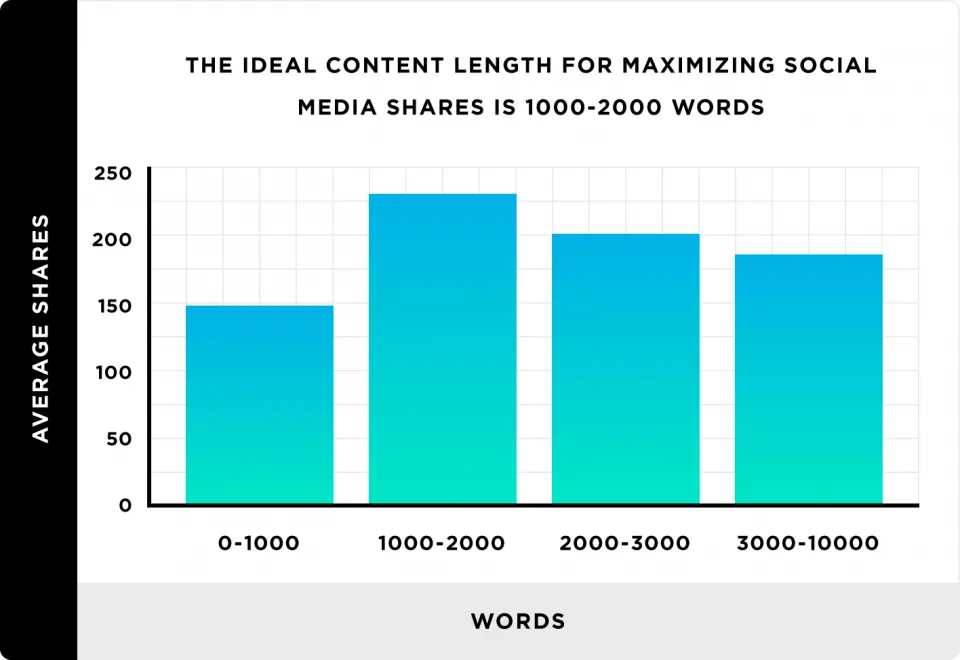
Want to maximize shares? The ideal content length is between 1,000 and 2,000 words.
Shares peak at 1,000–2,000 words; longer posts get slightly fewer shares but still more than posts under 1,000 words.
The Keys to Long-Form Success: Layout, Headlines and Subheadings
We believe a genuinely valuable article can't be too short; it needs enough length to give readers the knowledge they came for. In content marketing, shorter isn't always better. Your article's layout, headline and subheadings are what make long-form content work.
Once you've written a strong long-form piece, you can send it to your list on a regular schedule through an email newsletter (EDM) so the content keeps bringing people back. To start building that list, see why a customer list is the best starting point for remarketing. For help writing headlines that pull readers in, read how a compelling headline can lift conversions.
Related articles
- Why Personal Branding Matters So Much in the Gig Economy
- How to Choose Marketing Automation Tools for a Small Business
- [Must Read 2026] LINE Official Account Price Hike: Cut Costs