
Founder's Mindset
Promotion, Selling, Marketing — Know the Difference to Drive Sales
Published

What is the difference between promotion, selling and marketing? An Eddie Peng joke and a florist show how price cuts, sales pitches and value creation differ — and why marketing wins loyal customers.
Contents
Promotion relies on price cuts, selling relies on asking for the purchase, and marketing creates and communicates value. Let's start with an analogy everyone gets:
A young man says to a young woman: "My dad left me three houses. Be with me, and one day they'll all be yours!" That's promotion.
A young man says to a young woman: "I play guitar and piano, I sing, I paint, and cooking is no problem for me. I am the best! I promise to make you happy — spend your life with me!" That's selling.
"I'm Eddie Peng." That's marketing.
The man never confesses his feelings (in fact, they never even speak), yet she's already captivated by his charm and poise. He may not even know her, but all of her friends can't stop praising him. That's the power of a brand.
Ultimately, what you want to build is goodwill and customer trust — and through them, win high-value, loyal, lifelong customers.
To market successfully, a brand has to invest time in building awareness and showing people the distinctive value it brings. You show that you care about society and your target customers, and that your brand is committed to solving their problems (rather than just selling a product). None of that can be achieved by reciting a "list of features" or fighting a price war.

The florist example: how do promotion, selling and marketing differ?
Here's another example. Xiao Ming owns a flower shop:
- When he sees a customer hesitating, he says: "For this special day, every bouquet is 20% off!" That's promotion.
- He spots a couple strolling down the street without any flowers and says: "It's Valentine's Day — buy a bouquet for your partner to show how you feel!" That's selling.
- He brings beautiful bouquets, takes a series of romantic photos of an attractive couple, and posts them on social media to catch the public's eye. That's marketing.
In short, marketing means packaging your service or product so customers understand they choose you not only because it's practical, but because you deliver value and solutions.
Through the lens of value and price: what's the real difference?
A sale is really an exchange of value for price. To tell promotion, selling and marketing apart more clearly, look at them through value and price.
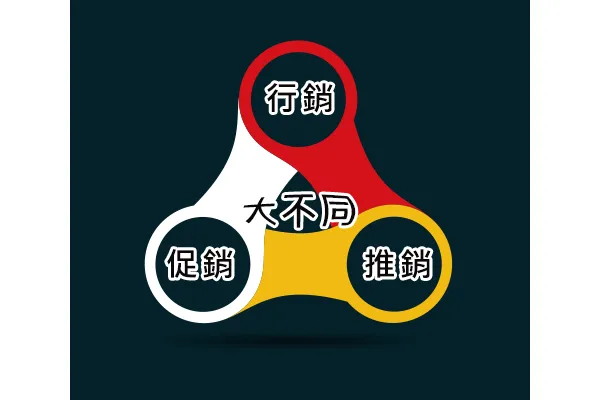
Why is promotion the simplest method — and the most damaging?
Promotion means slashing prices in a big sale, pushing the price below the value target customers place on the product in order to close the deal. It's the simplest and most direct of the three methods, but it also does the most damage to a brand.
Promotion doesn't raise the product's perceived worth — and it trains target customers to expect the next price war. In the long run, they stop valuing what makes the product unique and fixate on price alone. The soul of the brand gradually fades and is forgotten, until eventually every customer is lost.
Promotion: the product's value doesn't matter; just lower the price so target customers buy.
What is selling really about?
In selling, a brand communicates the product's inherent value plus any added value in the context of the purchase — for example, "Buy jewelry for your partner on Valentine's Day and she'll love you even more." Selling is mainly about getting target customers to buy, so during a campaign the brand actively reminds them to make a purchase decision. Whether it raises the product's perceived worth isn't the main objective.
Selling: state the product's value and ask target customers to buy it.
How does marketing create and communicate value?
The core work of marketing is "creating value" and "communicating value."
First, you create value for each product — for example, using product positioning to set an anchor, or using advertising to build a great selling atmosphere. Then you use the right channels to communicate that value to target customers, gradually raising the product's perceived worth in their minds. Remember: marketing isn't about aggressively pushing customers to buy. It communicates value mainly through subtle or passive activities.
Marketing: create and communicate the product's value to raise its perceived worth in the target customer's mind.
Creating value is the marketing that lasts.

In day-to-day business, communicating value can be simple: regularly share useful know-how and customer experiences, or prepare small surprises for regulars, instead of only showing up when there's a sale. A one-person brand can start with the brand tools for solopreneurs to put its expertise on a single page, then use multichannel messaging automation to send content on a steady rhythm once the contact list grows. To see how customers become loyal step by step, read 4 Keys to Guiding Customers Up the Value Ladder.
Related articles
- Why Personal Branding Matters So Much in the Gig Economy
- How to Choose Marketing Automation Tools for a Small Business
- [Must Read 2026] LINE Official Account Price Hike: Cut Costs