
Founder's Mindset
Fleecing the Pig, Not the Sheep
Published Updated

"Fleecing the pig, not the sheep" means profiting from the data and relationships your core business creates. The Didi vs. Kuaidi subsidy war shows how it works and what small businesses can learn.
Contents
A business doesn't have to make its money from its core operation. Instead, it can use the data and relationships that operation generates to spin off a different, more lucrative line of business.
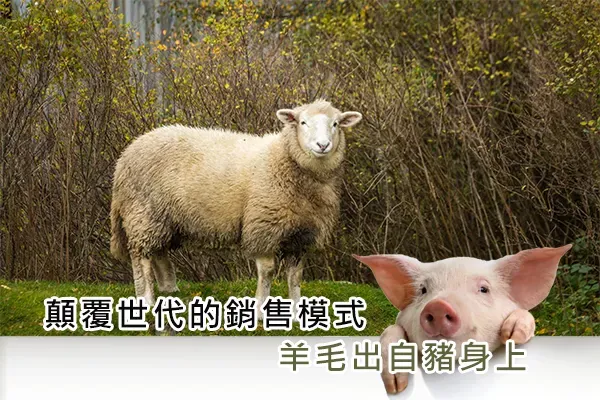
This is a sales model that redefined a generation. Put simply, the sheep is your core business and the pig is the business you spin off from it — but the money-making wool only grows thicker because of the pig.
The Ride-Hailing Subsidy War: Why Give Money Away?
In 2013, Tencent and Alibaba each backed a taxi-hailing app: Didi Dache and Kuaidi Dache. In early 2014, the two launched a subsidy war to win users. Passengers who booked through the app and paid by mobile payment got discounts, and drivers received a bonus for completed rides — Didi paid through WeChat Pay, Kuaidi through Alipay. Reports put each side's spending on the subsidy war at around RMB 1.5 billion.
Clearly, that kind of money is nearly impossible to recoup from the taxi business itself. But the subsidy war got huge numbers of people to open and get used to mobile payment accounts — and the money building up behind those accounts ran into the hundreds of billions of yuan!
The Real "Pig": Money Sitting in Payment Accounts
So how did that happen?
Once customers opened an account, they could not only pay fares and collect subsidies conveniently — any balance could also be moved into money market funds such as Yu'e Bao, earning more than a bank demand deposit. As a result, many people moved money they would otherwise have kept in the bank into these online accounts. Take Alipay's Yu'e Bao:
Hundreds of billions in less than a year — a figure some banks couldn't reach after decades of effort! Ride-hailing subsidies were one of the gateways that brought users into these payment accounts. And a payment platform holding that much money and that many users can move into financial services once reserved for banks. The growth potential was, in a word, limitless.
This example perfectly captures the "fleecing the pig, not the sheep" mindset. In today's business landscape, your core operation isn't always the main way you make money; by strategically using the data and relationships tied to it, a company can expand into far more profitable arenas. The ride-hailing apps set out to simplify booking a taxi, yet they ended up steering users into the world of finance. It shows how vital strategic thinking is — and that in an era of rapid change, opportunity often lies in unexpected places.
Where Is the "Pig" in a Small Business?
Small businesses don't need to burn cash on subsidies, but the same thinking applies: every interaction your core business has with a customer builds up "data and relationships" — contacts, preferences and trust. Use lead forms to turn visitors into leads you can contact again, tag them by source and interest, then follow the customer journey to spot repeat-purchase, add-on or new-service opportunities. For another case where the money doesn't come from the core business, read "What? A Free $188 Nightgown Earned Over 70 Million?"
Related articles
- Why Personal Branding Matters So Much in the Gig Economy
- How to Choose Marketing Automation Tools for a Small Business
- [Must Read 2026] LINE Official Account Price Hike: Cut Costs