
Funnel Marketing
Know Your Customer's Temperature and You'll Know How to Sell
Published
What are cold, warm and hot traffic? Learn where each comes from, how they map to awareness, consideration and purchase, and the nurturing strategy that turns strangers into ready buyers.
Contents
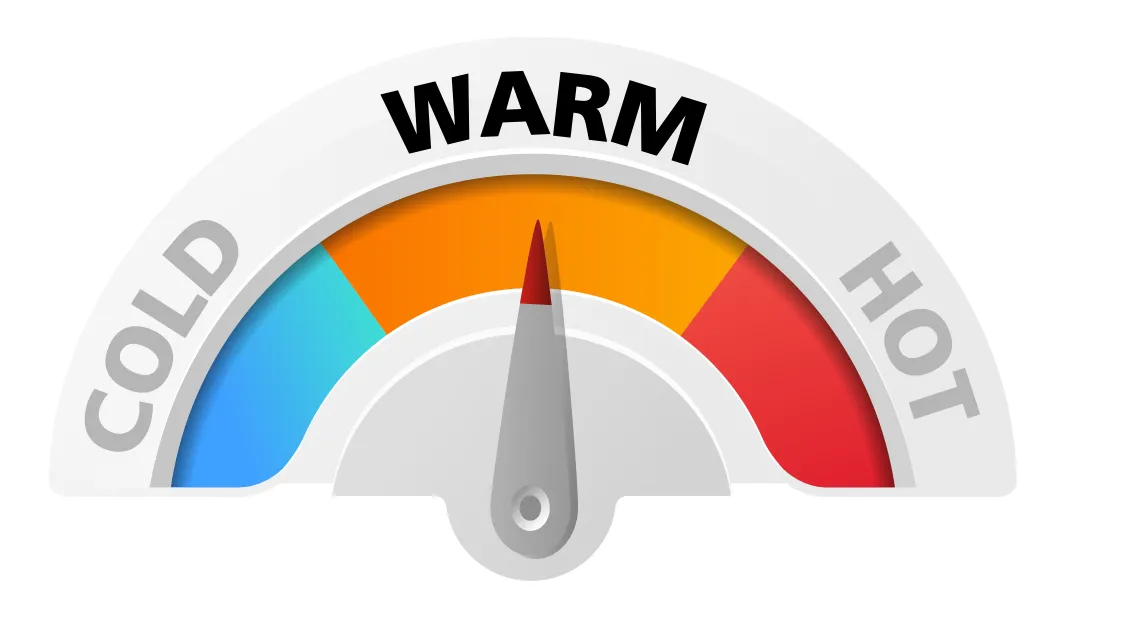
Traffic has a temperature: cold traffic doesn't know your brand, warm traffic knows you and may even have thought about buying, and hot traffic understands your product and is ready to buy. The colder the customer, or the higher the price, the longer the nurturing takes — know your customer's temperature and you'll know how to sell.
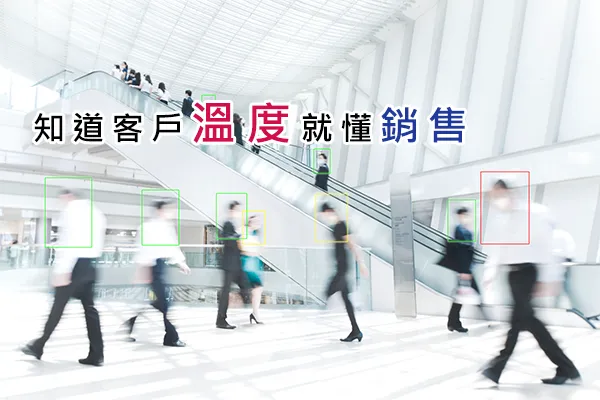
Who counts as hot, warm and cold traffic?
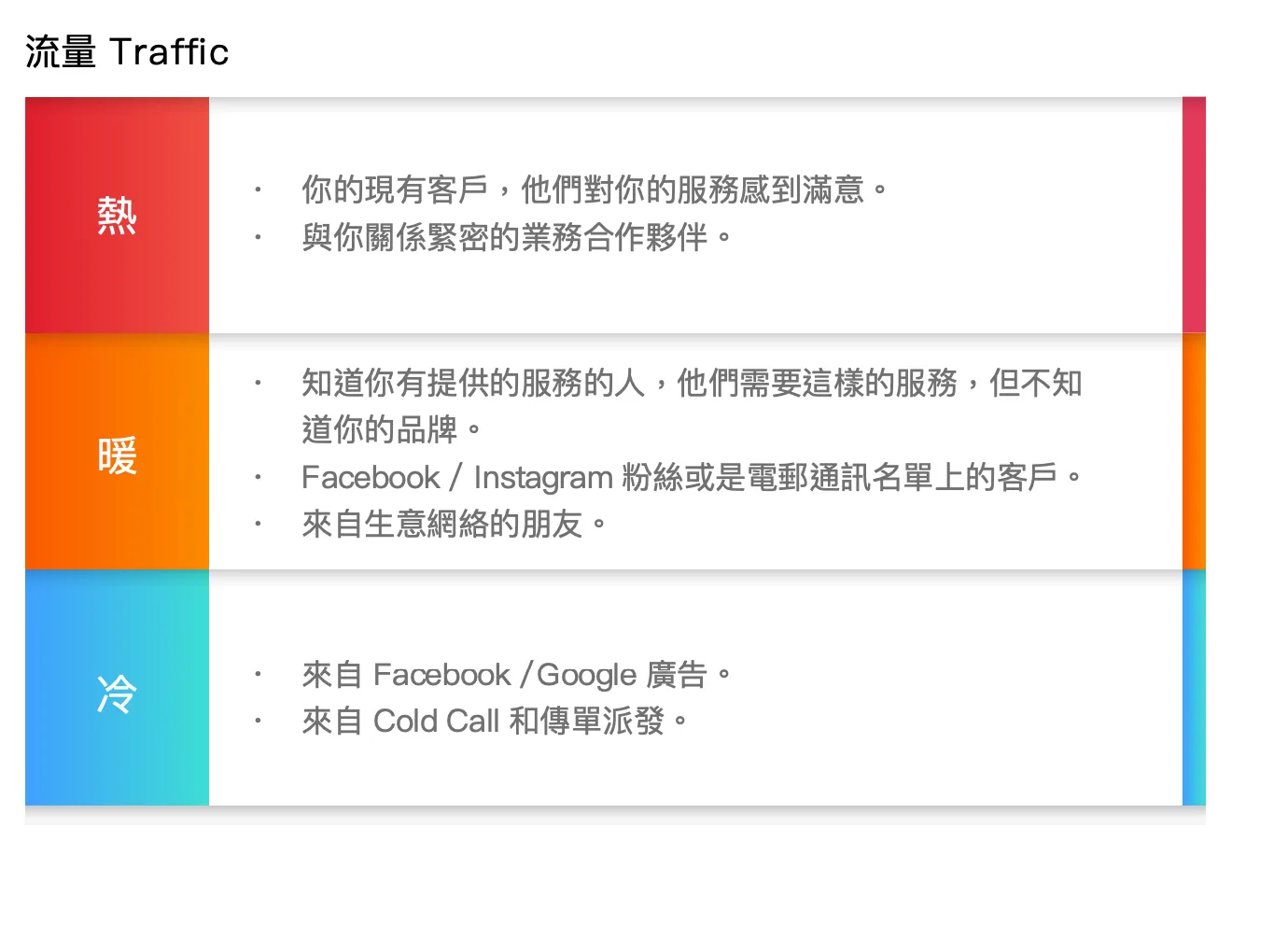
Imagine you run a nutritional therapy center with hundreds of clients who are very happy with your service. When you introduce a new service, they'll likely buy without a second thought — that's hot traffic. Hot traffic means existing customers know your brand so well that a quick call or a LINE or WhatsApp message is enough for them to order; you barely need to lift a finger to close. Hot traffic also includes people who have done their homework, concluded that your product solves their problem, and just need an easy way to order.
By contrast, when you run ads across different media to attract new customers, those visitors may not know your brand or services at all — that's cold traffic. Yet cold traffic includes plenty of prospects who already need what you offer; they simply don't know your brand, and if you don't give them a way in, they may go elsewhere. Giving them a way in means staying in touch: a simple form paired with an attractive offer or useful information turns them into registered leads, which starts the second stage of nurturing — turning cold traffic into warm traffic.
Why does cold traffic need a warm-up?
Cold-traffic customers need a warm-up process. In the second stage you have to explain more, and that takes a deliberate plan. Nurturing means you can't expect people to buy on the spot — especially for high-priced products, where the path you guide them along has to be designed with even more care.
Automated follow-up walks customers, step by step, into a deeper understanding of your brand: why your product suits them, why it beats similar alternatives, how to use it, and what support and customer service you offer. As they take it all in, you give them confidence — and that's how cold traffic becomes warm, and warm becomes hot. They're ready to buy!
From awareness to purchase: the 3 stages of buying
A target customer who doesn't need your product today may well need it tomorrow. Offer a free trial, a free sample, a free consultation, an ebook download or a video introduction, and you spark interest in and awareness of your brand. Signing up costs them nothing — and you've stopped them slipping away. As long as you stay connected, you get more chances for them to know you. Your expertise and what you share become the foundation of their trust, and trust is what leads to a purchase.
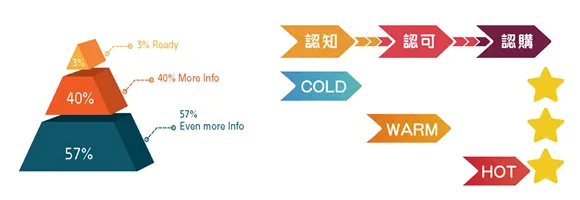
Here are the three stages of a customer's buying journey:
Why focus on the 40% who aren't ready to buy yet?
In Why 90% of Startups Don't Survive Two Years, we noted that after an ad generates exposure, only 3% of the audience has an immediate need. That's warm and hot traffic, and easier to convert — but you shouldn't look only at the most accessible 3%.
Successful brands build a complete sales-nurturing flow: an automated system that delivers value continuously and guides people, step by step, toward the business's ultimate goal — the purchase. They focus on the second tier, the 40% of target customers who aren't ready to buy and want more information first. So your funnel should be set up to raise brand awareness and deepen the impression your brand leaves.
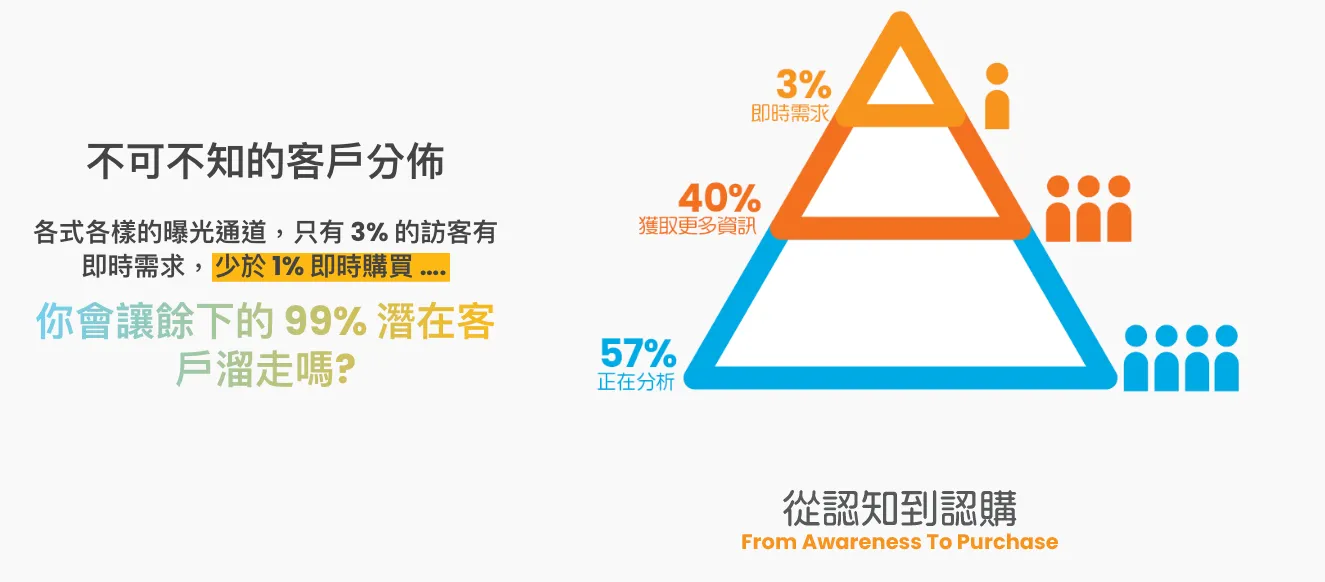
Remember: a target customer may not need the product in your ad today, but that doesn't mean they never will. Offer something extra — a free trial or free consultation — and you spark interest and awareness. Prospects can also read recommendations from your existing customers, building trust and continuing up the value ladder; the higher they climb, the more they spend with your brand.
What's the sales goal for cold, warm and hot traffic?
- Cold traffic is a stranger → your goal is to make contact
- Warm traffic is a prospective buyer without established trust → your goal is to give context, helping them understand you and nudging them toward a decision
- Hot traffic is a customer ready to buy → your goal is to close the sale
Highly satisfied customers — your die-hard fans — are the true enthusiasts within hot traffic, and they can even do word-of-mouth marketing for you.
Moving from cold to warm to hot is a process. Cold traffic takes longer to nurture, while hot traffic just needs a final nudge you should be ready to seize. That's why businesses should focus on an overall nurturing strategy: guiding conversions and continuing to deliver value is how you create scalable, automated sales.
In practice, the first step with cold traffic can be a lead form that trades an offer or useful information for contact details. After sign-up, use multichannel messaging automation to schedule email, SMS or LINE follow-ups by customer temperature. For sequence ideas, see 5 drip follow-up sequence templates.
Related articles
- Event Registration Form: Setup, Reminders & Check-in Guide
- Online Booking Form: What to Collect & How to Cut No-Shows
- From funnel form to follow-up: how multi-channel drip sequences actually work