
Founder's Mindset
The Difference Between Voting, Surveys, and Polling
Published

What's the difference between voting, surveys and polling? Compare how formal each one is, the questions they ask and the data they give you, plus how to prevent duplicate votes.
Contents
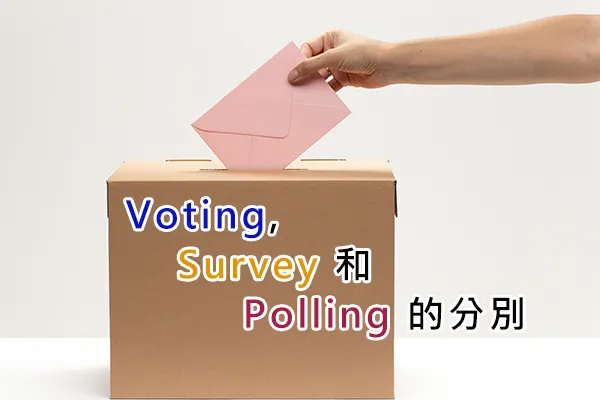
The difference between voting, surveys and polling comes down to the information you need: use voting when you need a formal, binding result, a survey when you want detailed and subjective opinions, and a poll when you just want a quick read on what your community prefers. In Chinese, "voting" and "polling" are often translated with the same word, but on closer inspection they are genuinely different things.
What Are Voting, Surveys and Polling?
Voting
A more formal, large-scale decision-making activity whose result is generally treated as official and authoritative. Think of an organization electing a new president: nobody gets the job simply because colleagues happen to like them. There is usually a vetting process and a ballot before that person is recognized as the right candidate.
Surveys
A survey lets you ask multiple questions across a much wider range of question types. You can ask respondents to leave comments, an email address, name, mailing address and other details, and you can capture their opinions through multiple-choice questions as well.
Polling
A more casual way to gather feedback, typically built around a single multiple-choice question. Participants choose from answers you've defined in advance, and you can limit them to one answer or let them pick several.
Which One Should You Use? It Depends on the Information You Need
The distinction between these three ways of expressing an opinion usually comes down to what you're looking for:
- You want objective, overall distribution data on one question: a poll helps you quickly see what your community prefers.
- You need more subjective, detailed opinions: a survey collects many individual perspectives and tells a fuller story about why people prefer what they do.
- You need a formal, ratified result: voting relies on registration, and participants may need to give their name and identity, or verify by email or mobile phone, so every ballot is more rigorous.
How Do You Prevent Duplicate Votes?
Technically, you can choose a verification method that fits your needs so the same person can't vote twice:
- Voting: because it's the more serious format, we generally recommend asking voters to verify with an email address or mobile number before they cast their ballot. You can also let voters sign in with Facebook or Google as proof of identity, which removes the need for a verification code.
- Polling: simpler. Signing in with Facebook or Google already counts as identity verification.
- By IP address: if you want your poll to collect responses faster, you can use the IP address as a marker, but this is never one hundred percent accurate.
How to Use Them in Marketing
Once you know which is which, the next step is turning interaction into engagement and leads. Brand examples such as M&M's letting the public pick a new color and Starbucks running quick polls on social media are covered in interactive marketing: how brands use voting and polls.
In practice, when you want fans to decide on a new product, a named, one-person-one-vote voting form links every vote to someone you can notify later. When you want to understand customers more deeply, a survey form tags each contact automatically based on their answers, so your follow-up can match what each person needs.
Related articles
- Why Personal Branding Matters So Much in the Gig Economy
- How to Choose Marketing Automation Tools for a Small Business
- [Must Read 2026] LINE Official Account Price Hike: Cut Costs