
Funnel Marketing
[Pro Tip] A Small Shift in Your Profit Point Can Boost Sales
Published
Raise average order value by moving your profit point from the hero product to add-ons. Compare Add-Ons, Order Bumps and Upsells, with an air fryer case where orders tripled and profit rose.
Contents
- How does an Order Bump raise average order value?
- Shift the profit point: your hero product doesn't have to make the money
- Real case: air fryer orders tripled
- How do Add-Ons, Order Bumps and Upsells differ?
- Going further: multi-step paths with Upsells and Downsells
- Don't forget abandoned carts
- Let your add-on flow run on its own
Moving your profit point from the hero product to an add-on lets you lower the barrier to buying while raising both average order value and total profit. The idea is simple: product A costs $100; if the customer adds product B for $50, the order is worth $150. Add-Ons, Order Bumps and Upsells are all powerful catalysts for that extra purchase.
How does an Order Bump raise average order value?
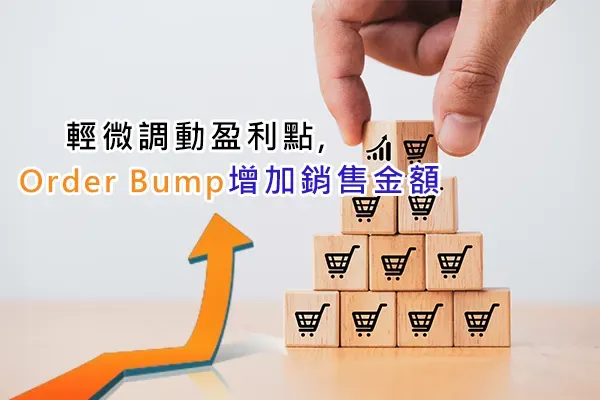
An Order Bump is a classic retail and convenience-store tactic: recommending one more item right before checkout. Because the customer is already about to pay and has no particular worries, it's easier, faster and more effective to suggest a highly complementary product or accessory — and that small step pushes up the value of every order.
One study found that "using an Order Bump strategy lifts Average Order Value (AOV) by about 8% compared with not using one," and Order Bump products typically convert at 30% or more.
Keep in mind that add-ons raise the value of each order; they don't create more orders. Put a single product plainly on a page and you earn exactly what you sell. So what if that product isn't selling well to begin with?
Shift the profit point: your hero product doesn't have to make the money
You can sell a product at a high price and still not earn much. Meanwhile, some merchants sell at cost and still generate strong profits.
In Fleecing the Pig, Not the Sheep, we explained that your biggest profits may not come from the thing you're selling. Sales strategy is endlessly flexible: sometimes, looking from a different angle and moving the profit point off your hero product unlocks more sales.
Real case: air fryer orders tripled
Here's one of our clients, a Japanese appliance brand selling air fryers online. Originally they simply sold the product through a shopping cart:
- Air fryer price HK$1,999, cost HK$1,400, profit HK$599 per unit
- 5 units a month, profit HK$2,995
After studying the numbers, we changed the sales focus:
- Page 1: a limited-time, near-cost offer on the air fryer at HK$1,550, profit HK$150 per unit.
- Page 2: a free recipe guide, DIY Masterclass: The Ultimate Home BBQ, showing customers how to make char siu and crispy pork belly in this air fryer — plus the option to add a "Spanish Natural Pork: Char Siu + Crispy Belly" set at HK$180 a box (cost HK$85, profit HK$95).
With a near-cost price and a free recipe guide as the hook, customers saw the limited-time deal as too good to miss. Orders more than tripled to 17 in a single month. Not everyone added the food set, but 12 customers did.
It's still an Order Bump — but by slightly lowering the first barrier and using a limited-time offer to create urgency, you greatly increase the chance they'll buy. With the profit point on the second-page product, sales go up and so does profit. And what you gain isn't just profit: you also gain customers, which means more sales opportunities in the future.
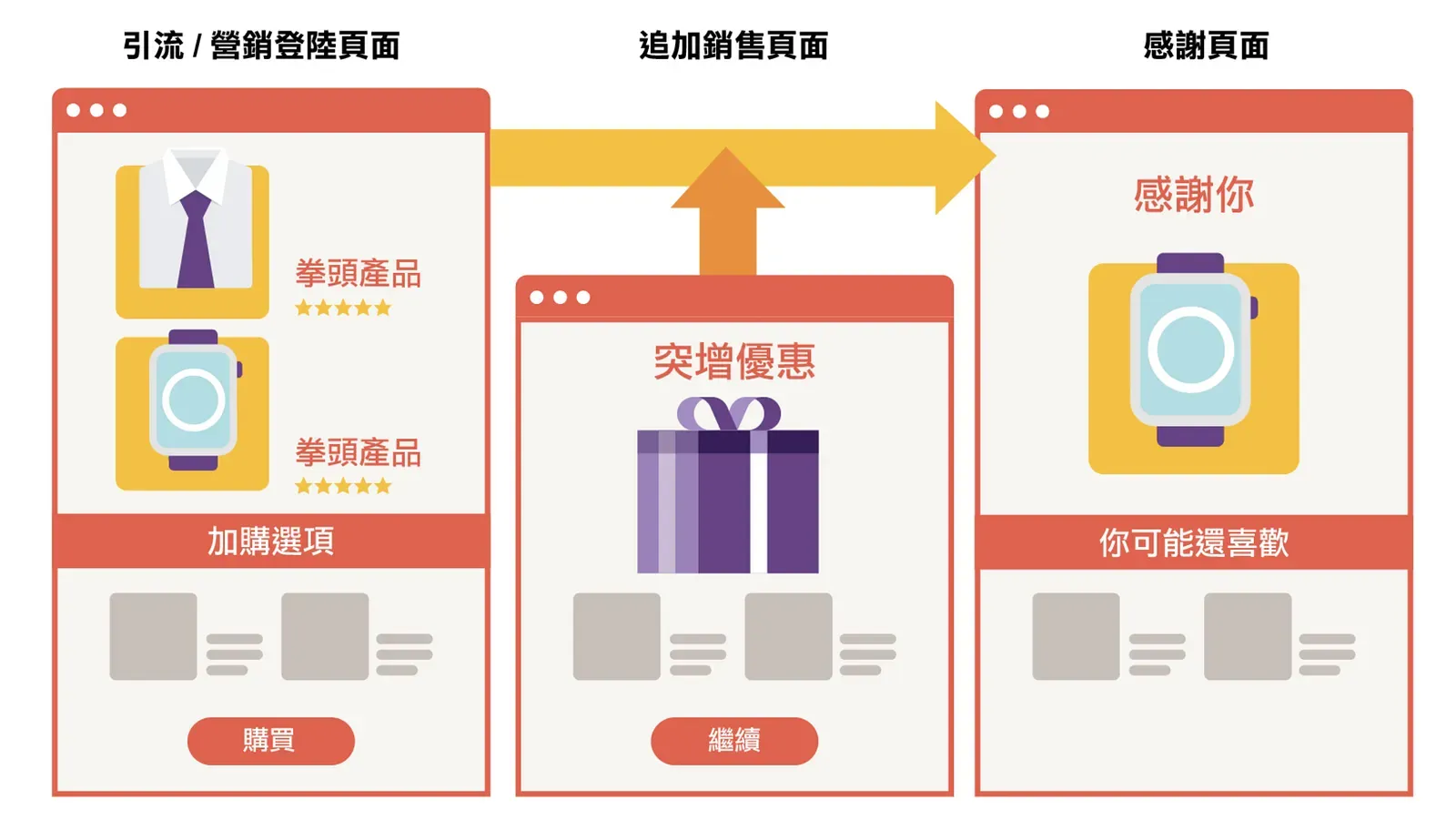
In a sales funnel, a common Order Bump flow looks like this:
- The hero product on page 1 isn't there to make money.
- A second page offers a discounted add-on — and that add-on is the profit point.
- The thank-you page recommends a higher-priced product.
The profit can sit on the Order Bump item, but watch the price point: a bump item that's too expensive makes customers stop and think. For example, if your main product is $300, the bump item shouldn't cost more than $50.
How do Add-Ons, Order Bumps and Upsells differ?
An Order Bump is an offer made before checkout; an Upsell is a recommendation made after it. An Upsell plans the next step once a customer has completed a purchase journey. It isn't necessarily about selling another item — it's really about buying into their future. For example, you might ask if they'd like a free sample, explain its benefits, and let them decide; once they start considering it, you've planted a reason to come back.
You can also make static recommendations: list Add-On Items alongside the hero product so everything is visible on one page, prompting impulse add-ons without interrupting the shopping flow. Here's how the three compare:
Going further: multi-step paths with Upsells and Downsells
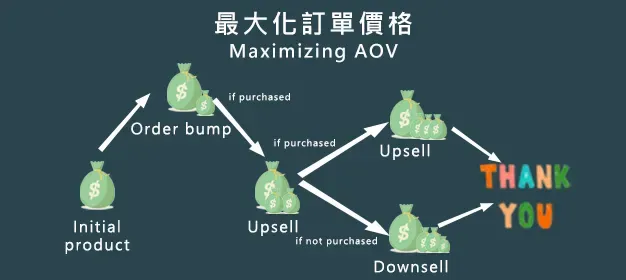
To go a step further, if you have several related products, you can design a multi-step sales path, linking different funnels to run Upsells and Downsells.
Upsells and Downsells are similar ideas: if a customer turns down your first Upsell, you offer a similar but cheaper product instead. That already gives the customer a comparison and is your last good chance to make the sale. If they accept the first Upsell, you can offer them one more value recommendation.
Don't forget abandoned carts
A complete sales strategy can't ignore the abandoned cart. According to research compiled by Baymard Institute, around 7 in 10 online shopping carts are abandoned — because of extra costs, a complicated checkout, or last-minute hesitation before paying. A gentle, well-timed reminder can win back some of those orders; for the causes and how to design a reminder sequence, see Abandoned Cart Remarketing.
Let your add-on flow run on its own
A sales funnel uses focus and guidance to smooth the path to purchase, nurturing to build the desire to buy, and remarketing to win back lost orders — all running automatically as a conversion machine that never sleeps.
To try the "hero product + add-on" approach yourself, a mini store form puts your products, a limited-time offer and a countdown on one page, recommends add-ons and applies coupons before checkout, and saves every buyer as a contact so you can recommend the next product later.
Related articles
- Event Registration Form: Setup, Reminders & Check-in Guide
- Online Booking Form: What to Collect & How to Cut No-Shows
- From funnel form to follow-up: how multi-channel drip sequences actually work