Funnel Marketing
How to Effortlessly Fill an Event With 100 Registrations
Published
A sign-up form alone won't fill your event. Two real cases show how copy, community trust, itemized value and countdown offers get 100+ registrations and turn attendees into paying customers.
Contents
Whether an event fills up with 100 registrations has less to do with the sign-up form itself and more to do with the content, trust and offer you build beforehand. Over the years we've handled online registration flows for events of every size. A small event can be as simple as a form with a few fields; a large one may need a full membership system — individual and group registration, tiered pricing, separate logins, group QR-code check-in, check-in by mobile number, attendance reports, and a series of automated nurturing steps before the event.
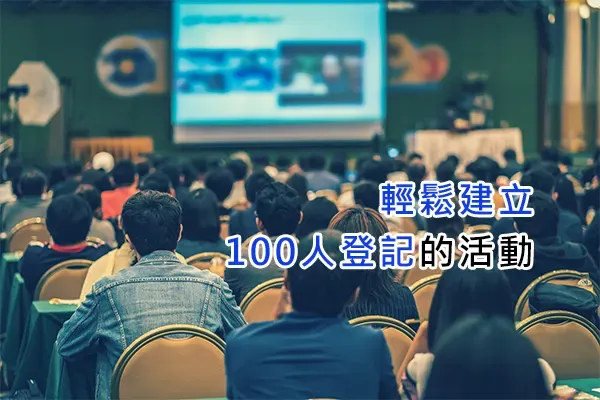
Some events are a product in their own right (paid events), but many more are a marketing tactic — a bridge to a bigger sale later. Below is what we've learned, as a reference for event organizers. For which fields to collect and how to set up confirmations and reminders, see How to Build an Event Registration Form; this article focuses on getting people to sign up, and then to buy.
Paid vs free events: different goals, different design
Paid events (sales)
When you sell a paid event, you usually build appeal with promotional pricing such as early-bird or bring-a-friend deals. Your content, pricing and session options must be clear and easy to find. On the system side, cap sales to fit the event (for example, ticket-type limits and class sizes), set up pre-event attendance notices, and keep an attendance record.
Examples: course sales, paid admission, ticketed events.
Free events (marketing bait)
A free event usually aims to spark interest with a compelling headline. Your audience pays nothing, yet each registrant becomes an asset in your database — what we call a marketing lead magnet, and one of the fastest ways to grow a membership base.
This touchpoint lets prospects get to know your product or service and start to trust you. Add a single conversion action near the end of the event — say, registration for a paid course — and your conversion rate can rise dramatically.
Examples: free talks, a free 7-day course, information sessions, small meetups.
You have a sign-up form — so why isn't anyone registering?
Build a form and the crowds will come? Of course not. Getting your audience to register takes several elements:
Copywriting
You need a compelling headline that shows readers at a glance that you can solve their pain point. Come across as an expert with the ability and strategy to guide them step by step, and they'll be drawn in and register. Whether in words or visual design, this is an essential skill.
Audience
Ads and posts on social media, announcements to current customers and re-engaging past customers are all audiences to consider. Ads bring cold traffic (see Know Your Customer's Temperature), which takes longer to convert; if you sell a high-priced product or service, plan more nurturing steps to build appeal.
A free event is itself part of nurturing, and traffic at different temperatures needs different approaches. For now, assume your event content already attracts new sign-ups directly — in that case, advertising is a great channel for growing your list.
Registration and nurturing flow
Focus on the registration page and on overall management, so you can handle registrants and later conversions systematically. We usually advise against relying on Google Forms alone: it handles basic sign-ups but has no concept of contact management or nurturing. To contact people automatically, send reminders and schedule offers, you need an event funnel that records each customer's journey — one that lets you build an attractive page step by step, sends a confirmation right after sign-up and a reminder before the event, and tracks attendance.
Lots of attendees, but very few buyers?
Here are points we've found are often overlooked. Fix these and you'll lift both registrations and conversions.
Event content
In our experience, consistently delivering value is vital, and nurturing after that first exposure is essential. Whether your content is engaging — and whether attendees genuinely feel helped after your free event — is what wins. Very often, a concise delivery that makes complex ideas easy to grasp does most to raise people's willingness to sign up.
Building trust
Trust is built through interaction and communication.
One client of ours ran an investment course. Before scheduling an online seminar, we worked on driving traffic: ads attracted prospects, but instead of pushing them straight to the seminar, we had them sign up for an e-book and immediately invited them into a WhatsApp group where the instructor shared free, real-time market insights. About two months later the group had passed 200 members. That audience had warmed up from cold to warm, so when we sent the webinar invitation, more than half registered — and an automated SMS reminder the day before pushed attendance above 70%.
Another client ran a parenting course. We set up a Telegram group in advance and, in the same way, kept sharing the parenting topics prospects cared about, discussing them together. More than 100 people registered for the event. At the seminar we built on that trust, answering one by one the questions collected in the group, adding live interaction and feedback, and staying true to a hands-on, grow-together approach. The final conversion rate reached 80%.
These two cases used WhatsApp and Telegram groups; with customers in Taiwan, the same approach would more often run through a LINE community. Either way, building trust clearly lifts conversion — and trust comes from effective communication and interaction.
How can offers and countdowns push the decision?
Offers and value
When you promote an event, present the offer clearly as a gift of real value.
Price isn't the same as value — everyone knows that. But if you're running an offer,
customers deserve to see the price and value of every item.
You could say the event is $5,000 cheaper, but to them that's just a number. We recommend itemizing it, for example:
Complete your purchase within 24 hours and these fees are waived:
- $1,000 consulting fee
- 3 coaching sessions / 1 treatment course, worth $3,000
- Protection and cleaning kit, worth $1,000
- Plus more skincare and wellness secrets (priceless)……
This quantifies the price calculation in customers' minds and makes the discount feel like a generous gift of value — while consulting and real solutions are value that can't be quantified at all. Once customers see you can solve their problem, they'll pay more.
Urgency
A countdown offer is a highly effective sales-psychology technique. When customers know an offer is only valid for a limited time, and only for selected customers, they feel both privileged and urgent: they worry that missing out means paying more, and with limited spots they hesitate less and buy sooner.
Conclusion: manage every touchpoint systematically
There are many methods, but what matters most is putting real thought into content design and customer management, and communicating strategically and consistently across multiple touchpoints (in Why 90% of Startups Don't Survive 2 Years, we explain the link between buying behavior and how often you reach customers). The more systematically you manage this, the better you'll be at building a base of quality customers.
In practice, an event registration form can handle session capacity and close automatically when full, send reminders before the event and check people in with a QR code — leaving your energy for the content and the trust.
Related articles
- Online Booking Form: What to Collect & How to Cut No-Shows
- From funnel form to follow-up: how multi-channel drip sequences actually work
- Service Booking Automation: Reminders, LINE Follow-Up & Rebooking